Intro
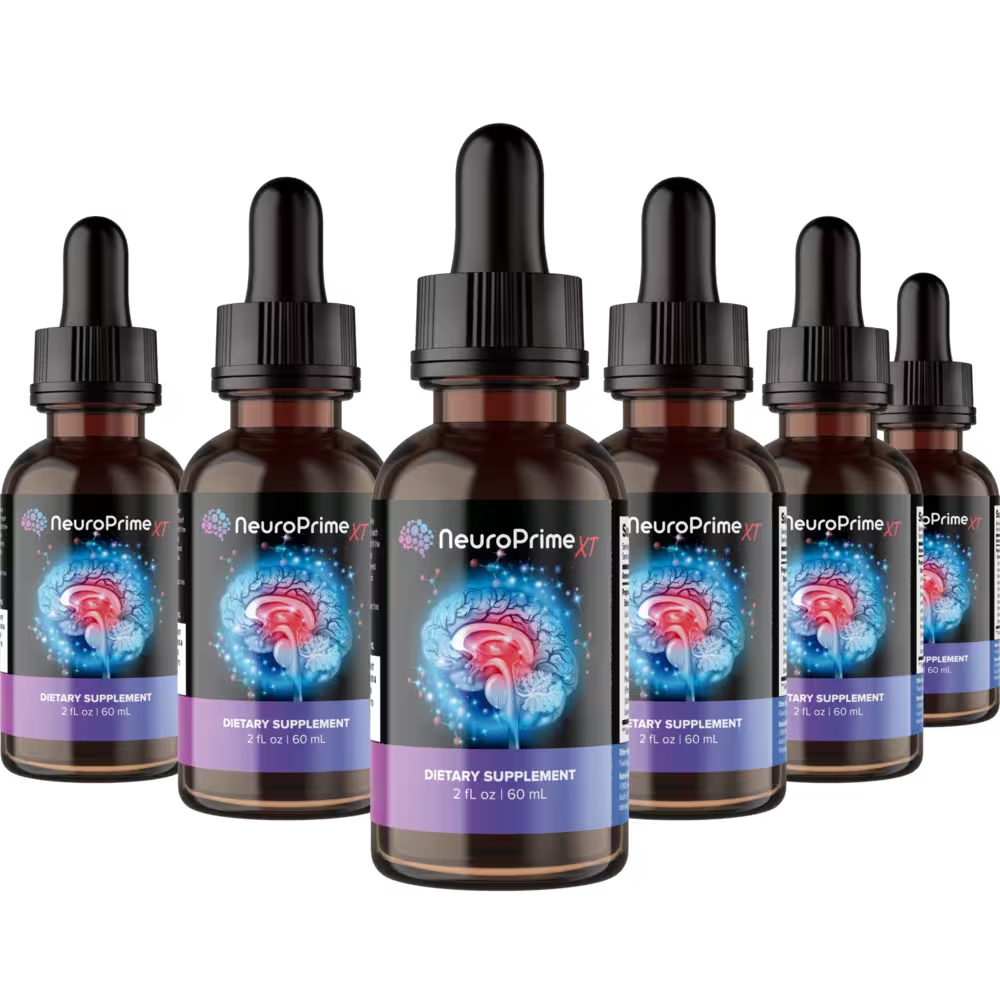
NeuroPrime works conceptually by combining nine botanicals that cover several areas relevant to everyday cognitive wellness. The formula brings together traditional memory-support herbs, ingredients associated with healthy circulation, and nutrient-rich plants and algae with antioxidant properties. It does not work like a prescription medicine or a caffeine-based stimulant.
The most accurate explanation is a support model, not a guaranteed mechanism. NeuroPrime does not disclose the amount of each ingredient, and the finished blend has not been shown here to produce a fixed clinical outcome. The sections below explain the intended roles while keeping those evidence limits visible.
Layer One: Memory-Oriented Botanicals
Bacopa monnieri has a traditional Ayurvedic role and is common in memory-support supplements. Lion's Mane is a recognizable mushroom used in modern cognitive-wellness formulas. Together they create the blend's memory-and-learning theme, but NeuroPrime does not state Bacopa standardization, Lion's Mane form, or either amount. They should not be framed as reversing decline or reproducing study results.
Layer Two: Circulation Context
Ginkgo Biloba and Pine Bark Extract are commonly discussed in relation to healthy circulation and antioxidant support. Normal blood flow helps deliver oxygen and nutrients throughout the body, including the brain. This gives both ingredients a logical supporting role in a cognitive-wellness formula.
That does not mean NeuroPrime has been shown to increase cerebral blood flow by a specific percentage or improve performance within a set period. Species, extract quality, standardization, and dose influence how research should be interpreted. Those details are not published for the blend.
Ginkgo also deserves a safety note. It may be relevant for people taking blood-thinning medication, using daily aspirin, managing a bleeding issue, or preparing for surgery. Professional guidance should come before use in those situations.
Layer Three: Nutrient-Rich Greens
Moringa, Spirulina, and Chlorella give NeuroPrime a nutritional dimension beyond the classic cognitive herbs. Moringa is a nutrient-rich plant, while Spirulina and Chlorella are algae used in many wellness formulas. They supply varied naturally occurring compounds and help support the product's plant-forward identity.
Their defensible role is nutritional and antioxidant context. Claims that NeuroPrime removes heavy metals, detoxifies the brain, or prevents oxidative damage would go beyond that support role.
Layer Four: Botanical Variety
Tamarind and Neem complete the blend. Tamarind is a fruit-bearing plant with naturally occurring polyphenols. Neem is a traditional botanical containing varied plant compounds. Both add diversity beyond the ingredients found in a basic memory formula.
Early or preclinical research on an ingredient does not prove a human outcome for the finished supplement. NeuroPrime does not state the plant part, extract form, or amount for Tamarind or Neem. Their role should remain supportive and general.
Layer Five: No Stimulant Dependence
NeuroPrime is positioned as stimulant free. It is not designed to work by creating a temporary caffeine rush, sharp pulse of energy, or later crash. That may make the experience less obvious than an energy product, but it can appeal to people who want to avoid additional stimulation.
No stimulant does not mean no biological activity or no interaction risk. Botanicals can still affect individuals differently. It also does not promise calm, mood improvement, or all-day focus. Those experiences remain personal rather than guaranteed.
Why the Blend Approach Matters
A multi-ingredient blend aims to provide complementary support instead of depending on one pathway. NeuroPrime combines memory-oriented botanicals, circulation context, antioxidant-rich greens, and broader plant compounds. The practical appeal is getting that variety in one daily product.
The tradeoff is analytical clarity. When nine ingredients share a formula and individual amounts are unknown, a buyer cannot tell how much each one contributes. A broad formula may suit someone who values convenience; it may not suit someone seeking a precise amount of a particular compound.
How the Liquid Routine Contributes
NeuroPrime's format can help by making use simple. Shake the bottle and take one drop per day, preferably in the morning. The drop can be taken directly or mixed into tea, coffee, juice, or another beverage. A stable morning cue may improve consistency.
The available direction does not instruct users to hold the liquid under the tongue for a set time, avoid food around use, or take a full dropper. Exact absorption percentages and rapid-onset claims should not be added without product-specific evidence. Convenience is the supportable format advantage.
What Consistency Can and Cannot Do
Consistent use makes it possible to evaluate whether a supplement fits your routine, but consistency cannot force a result. Sleep quality, diet, stress, hydration, activity, medication, and health conditions can all influence how someone feels. A change should not automatically be credited to the product.
A simple weekly note about use, sleep, caffeine, and unwanted reactions can add context without becoming a medical test.
How Long Should It Take?
NeuroPrime does not provide a guaranteed result timeline. Some ingredient studies evaluate weeks or months of use, but those timelines involve specific preparations and amounts. They cannot establish when or whether this finished blend will feel different for an individual.
Avoid pages promising noticeable effects in a few minutes, days, or a fixed number of weeks. A stimulant-free supplement is more responsibly approached with patience and realistic expectations. If no meaningful benefit appears, the 365-day guarantee provides a route to contact support.
The Role of Lifestyle
NeuroPrime can only be an addition to brain-health foundations. Regular sleep, balanced food, physical activity, social interaction, stress care, and meaningful mental challenge all support normal cognitive function. Medical evaluation remains important for new, worsening, or concerning symptoms.
The blend cannot compensate for severe sleep loss, untreated illness, medication effects, or poor nutrition.
Who Should Seek Professional Guidance?
Speak with a qualified healthcare professional before use if you take medication, are pregnant or nursing, have a medical condition, or are preparing for a procedure. Bring the full ingredient list. Do not rely on the phrase “plant based” as an interaction assessment.
Stop use and seek appropriate advice if you experience an unwanted reaction. Sudden confusion, weakness, trouble speaking, severe headache, or other urgent symptoms require immediate medical attention, not a supplement adjustment.
The Bottom Line
NeuroPrime is intended to work as a broad, stimulant-free botanical support formula. Bacopa and Lion's Mane reinforce memory and learning positioning. Ginkgo and Pine Bark add circulation and antioxidant context. Moringa, Spirulina, and Chlorella broaden the nutritional profile. Tamarind and Neem add further botanical variety.
This model is plausible as wellness positioning, but it is not proof of a clinical result. The lack of individual amounts limits precision. NeuroPrime's clearest strengths remain simple use, formula breadth, stimulant-free design, and a long guarantee.
FAQ
Does NeuroPrime increase brain energy?
It is positioned to support everyday cognitive wellness without stimulants. No direct energy increase, onset time, or all-day effect is guaranteed.
Does the liquid absorb better than capsules?
The product is convenient as a liquid, but no product-specific absorption percentage is provided. It should not be assigned a precise advantage without evidence for this formula.
Why are nine ingredients used?
The blend aims to combine memory-oriented botanicals, circulation context, antioxidant-rich greens, and wider plant nutrition in one routine.
CTA
Decide whether NeuroPrime's broad support model fits your preferences, then see the current package choices.